The AI Browser Wars of 2026: Why Everyone's Browser Just Became an Agent
Chrome, Comet, Atlas, and Dia are racing to turn your browser into an AI agent that books flights, fills forms, and shops for you. Here's what's actually changed — and why it matters.
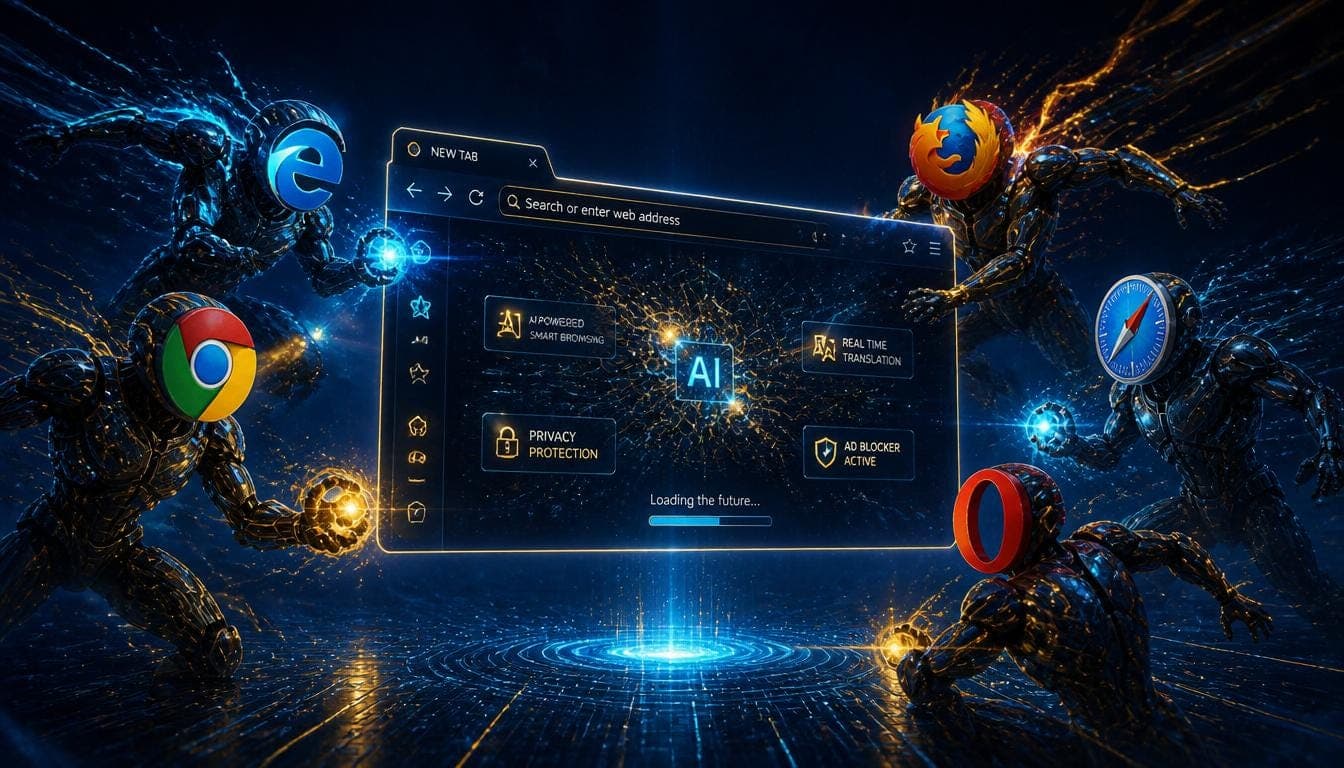
Your browser doesn't just browse anymore
For twenty years, a web browser's job was simple: show you pages and get out of the way. In 2026, that job description quietly changed. The biggest tech companies are now racing to turn the browser into something closer to a personal assistant — one that can read a page, understand what you're trying to do, and do it for you.
This is the "agentic browser" era, and it's arguably the most consequential shift in how people use the internet since the smartphone.
What actually changed this year
A few moments turned this from a niche experiment into a full-blown platform war:
- Google went all-in at I/O 2026, rolling Gemini deep into Chrome with a feature called Auto Browse — letting it handle multi-step tasks like booking flights, pulling invoices, or scheduling meetings straight from a plain-language prompt, backed by a "Personal Intelligence" layer that learns your preferences across Gmail, Calendar, and Maps.
- Perplexity's Comet went from an invite-only $200/month product to a free, cross-platform app on Mac, Windows, Android, and iPhone — and became the center of the industry's first real legal fight over agentic browsing.
- OpenAI's ChatGPT Atlas launched with an "Agent Mode" that could research and shop across the web on your behalf, but has already been folded into OpenAI's broader plans to merge ChatGPT, Codex, and Atlas into one unified desktop app.
- Anthropic, Opera, Brave, and a wave of smaller players (Dia, Sigma, Fellou) jumped in too, each betting on a different angle — privacy, speed, or "visible" step-by-step automation you can watch and interrupt.
The lawsuit that made it real
The clearest sign this isn't just a feature trend: Amazon sued Perplexity over Comet, arguing its shopping agent didn't properly identify itself as automated traffic and violated the platform's terms of service. A federal appeals court later stepped in on the side of allowing agents to act on a user's behalf — the first real legal precedent for AI agents browsing and buying on people's behalf.
That's the real story here. This isn't just "chatbot in a sidebar." It's a fight over whether an AI is allowed to act on the web the same way a human does — clicking, filling forms, completing purchases — and who's liable when it gets something wrong.
Why this is going viral right now
A few reasons this topic keeps resurfacing across tech Twitter/X, YouTube tech channels, and TikTok explainer accounts:
- It's genuinely disruptive. Analysts have projected the AI browser market growing from roughly $4–5 billion to well over $75 billion within a decade — that kind of number gets shared.
- It's relatable. Everyone uses a browser. Unlike most AI news, this isn't abstract — people can install Comet or turn on Auto Browse today and immediately feel the difference.
- It has a villain-and-underdog narrative. Google vs. OpenAI vs. Perplexity vs. scrappy indie browsers is exactly the kind of "who wins" storyline that performs well on social platforms.
- It raises real fears. Prompt injection — malicious websites tricking an AI agent into taking harmful actions — is a legitimate security concern that makes for compelling, slightly scary content.
The trade-offs nobody's advertising
Before you switch your default browser, worth knowing:
- Security risk is real. Because these agents can read pages and take actions, a malicious site can potentially hijack an agent through hidden instructions embedded in a page — a risk security researchers are actively flagging.
- Migration cost is real too. Most agentic browsers want you to fully switch, meaning lost extensions, saved logins, and workflows.
- "Agentic" doesn't always mean autonomous. Several of these tools are still previews, gated behind premium tiers, or limited to specific platforms — the marketing is often ahead of the actual capability.
The bottom line
2026 is the year the browser stopped being a passive window and started becoming an active participant in your work. Whether that ends with one dominant "AI-native" browser or with agentic features quietly absorbed into Chrome and Edge for everyone, the direction is clear: browsing is becoming delegating.
The real question isn't whether your browser will act on your behalf — it's how much you'll trust it to, and what happens on the day it gets it wrong.